← Back to publications

Research overview

Research Highlights

Research questions and main results for each paper, written in accessible language.

Theory

Figure 1 from Viscochiral Transport, comparing symmetric hydrodynamic vortices with chiral vortex selection

Viscochiral Transport: Chiral Selection of Hydrodynamic Vortices by Berry Curvature

A. Panigrahi*, K. Nazaryan*

Research question

How does Berry curvature affect the structure of vortices in a hydrodynamic flow of electrons?

Main result

A spatially varying Berry curvature generates a spatially varying profile of odd (Hall) viscosity. In a two-chamber device with oppositely valley-polarized domains, this selectively amplifies one vortex and suppresses the other.

*Equal contribution. Conceived and carried out independently in collaboration with a fellow graduate student.

Read the paper on arXiv ↗
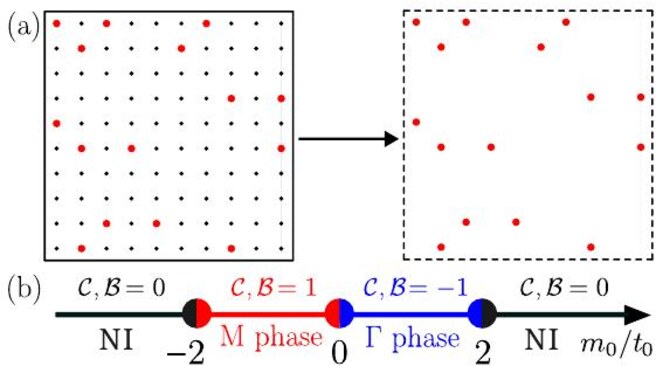
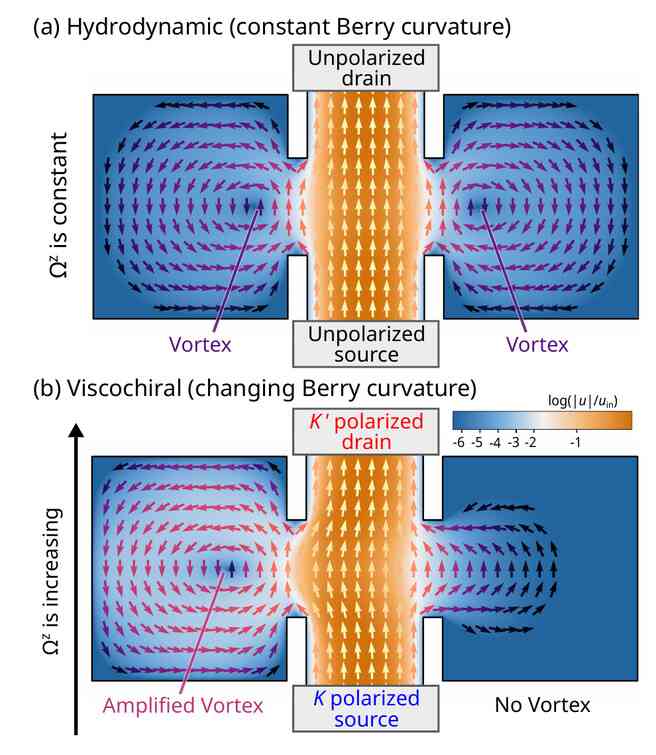
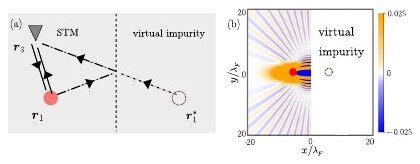
Figure 1 from Particle-Hole Ghost Interference in Superconductors

Particle-Hole Ghost Interference in Superconductors

A. Panigrahi, V. Poliakov, L. Levitov

Research question

Can the two-impurity quasiparticle interference effect be amplified for easier experimental detection?

Main result

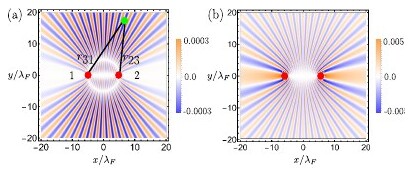
Any potential edge, domain boundary, or line defect can act as a local reflector and produce an “image impurity.” This creates two-impurity interference from a single impurity and parametrically strengthens the effect.

Read the paper on arXiv ↗
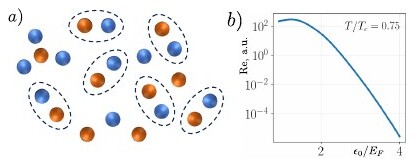
Figure 1 from Tunable viscosity across the BCS-BEC crossover

Tunable viscosity across the BCS-BEC crossover

Y. Liao, A. Grankin, A. Panigrahi, V. Galitski, L. Levitov

Research question

What is the nature of viscosity in an ultracold atomic gas near a Feshbach resonance?

Main result

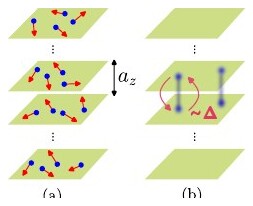
A controlled calculation using a two-channel boson-and-fermion model shows that viscosity can be tuned by several orders of magnitude near a Feshbach resonance.

Read the paper on arXiv ↗
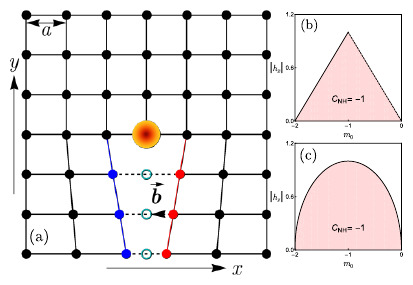
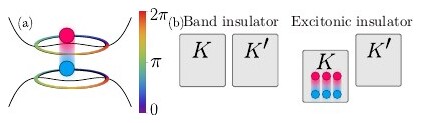
Figure 1 from Valley polarization of chiral excitonic bound states induced by band geometry

Valley polarization of chiral excitonic bound states induced by band geometry

A. Panigrahi, D. Kaplan

Research question

Can the Berry curvature of a parent band affect the topology of excitonic states in graphene?

Main result

The parent band’s Berry curvature changes the projected interaction and favors excitonic condensates with finite angular momentum. Exchange interaction also causes the excitonic ground state to break time-reversal symmetry spontaneously.

Read the paper on arXiv ↗
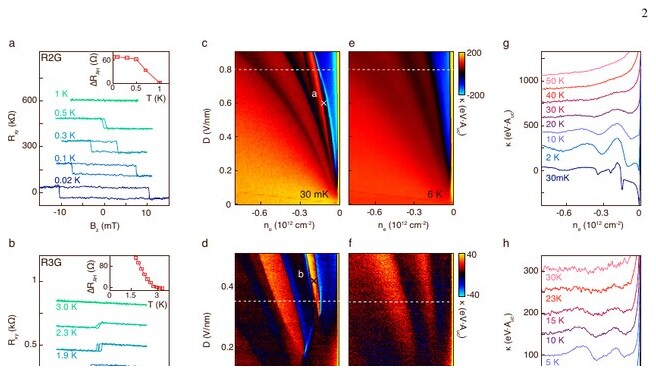
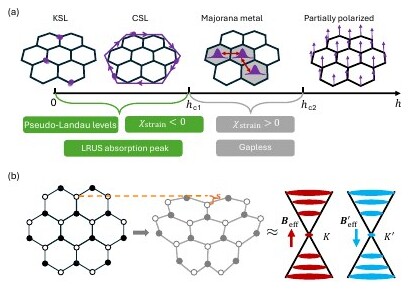
Figure 1 from Strain Response as a Probe of Spinons in Quantum Spin Liquids

Strain Response as a Probe of Spinons in Quantum Spin Liquids

P. Zhu, A. Panigrahi, L. Levitov, N. Trivedi

Research question

How can quantum spin liquids, which lack a direct experimental signature, be probed?

Main result

Nonuniform strain generates pseudo-Landau levels and a diamagnetic response in Kitaev and chiral spin liquids, whereas the Majorana metal has no such levels and responds paramagnetically. Local resonant ultrasound spectroscopy could distinguish these behaviors through elastic measurements.

Read the paper on arXiv ↗
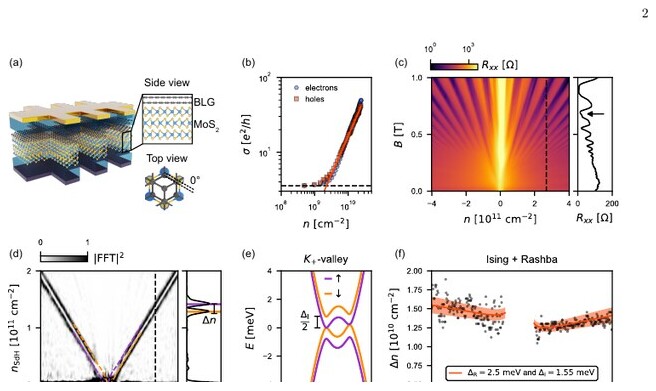
Figure 1 from Projected branes as platforms for crystalline, superconducting, and higher-order topological phases

Projected branes as platforms for crystalline, superconducting, and higher-order topological phases

A. Panigrahi, B. Roy

Research question

When a parent crystal hosts a topological phase protected by crystalline symmetry, what happens to the corresponding state in its projected brane?

Main result

Crystalline-symmetry-protected topological phases survive, with quantized local topological markers, in lower-dimensional branes that lack the parent symmetry. These branes can also host superconducting and higher-order topological phases.

Phys. Rev. B 113, 035301 (2026)

Read the paper on arXiv ↗
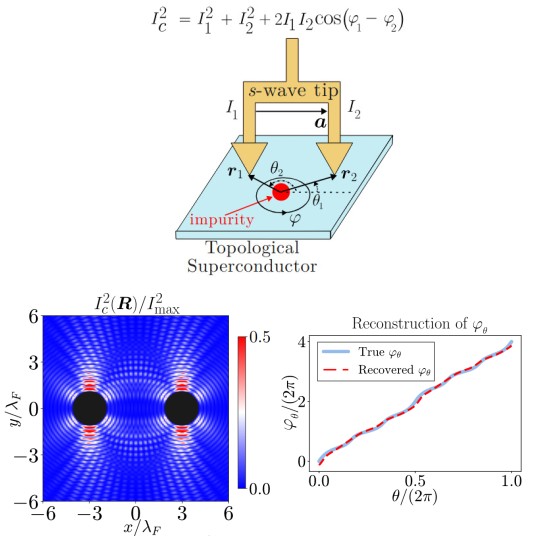
Figure 1 from Tomographic imaging of superconducting order using particle-hole interference

Tomographic imaging of superconducting order using particle-hole interference

A. Panigrahi, V. Poliakov, L. Levitov

Research question

How can the complex phase winding of the gap function in a topological superconductor be detected experimentally?

Main result

Quasiparticles scattered by multiple impurities sample the angle dependence of the order parameter, imprinting its phase winding in the tunneling conductance measured by STM. The method can reveal topology and nodal directions in realistic materials such as Sr2RuO4.

PNAS 123 (27), e2534730123 (2026)

Read the paper on arXiv ↗
Figure 1 from Non-Fermi Liquids from Subsystem Symmetry Breaking in van der Waals Multilayers

Non-Fermi Liquids from Subsystem Symmetry Breaking in van der Waals Multilayers

A. Panigrahi, A. Kumar

Research question

What are the effects of fluctuations beyond mean-field theory in subsystem-symmetry-breaking condensates in metallic layers of van der Waals materials?

Main result

Beyond-mean-field fluctuations can produce an anisotropic marginal Fermi liquid when the number of layers is sufficiently large. The calculated phase diagram predicts the conditions under which this state can be observed.

Phys. Rev. Lett. 134, 236502 (2025)

Read the paper on arXiv ↗
Figure 1 from Spin chirality and fermion stirring in topological bands

Spin chirality and fermion stirring in topological bands

A. Panigrahi, V. Poliakov, Z. Dong, L. Levitov

Research question

What microscopic mechanism generates scalar spin chirality in systems with broken time-reversal symmetry?

Main result

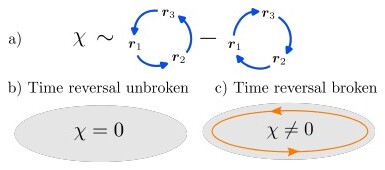
Broken time-reversal symmetry in the orbital degree of freedom—from valley polarization or a chiral superconducting gap—can generate spin chirality without spin-orbit coupling, solely through fermionic statistics. The effect could probe topological superconductivity using spin-sensitive STM near magnetic impurities.

Read the paper on arXiv ↗
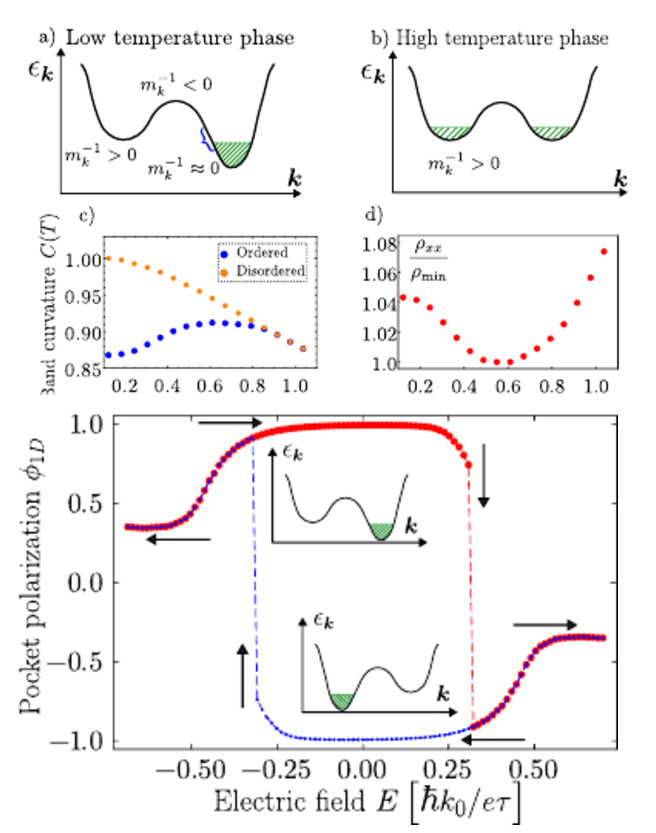
Figures 1 and 2 from Signatures of electronic ordering in transport in graphene flat bands

Signatures of electronic ordering in transport in graphene flat bands

A. Panigrahi, L. Levitov

Research question

What signatures do electronically ordered phases produce in the longitudinal resistivity of rhombohedral graphene?

Main result

A transition from momentum-polarized order to an unpolarized state can change the band mass so that resistance decreases as temperature rises, even in a metal with a partially occupied conduction band.

Phys. Rev. B 110, 035122 (2024)

Read the paper on arXiv ↗
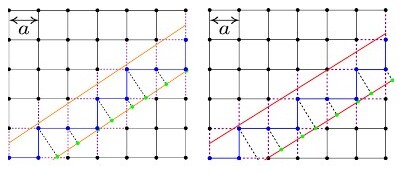
Figure 1 from Projected Topological Branes

Projected Topological Branes

A. Panigrahi, V. Juričić, B. Roy

Research question

Can a higher-dimensional topological phase be realized in a lower-dimensional brane?

Main result

A systematic projection that retains a lower-dimensional set of sites and integrates out the rest allows the brane to inherit properties of its parent system. For example, a one-dimensional brane projected from a Chern insulator can have a nonzero local Chern number.

Communications Physics 5, 230 (2022)

Read the paper on arXiv ↗
Figure 1 from Energy magnetization and transport in systems with non-zero Berry curvature

Energy magnetization and transport in systems with a non-zero Berry curvature in a magnetic field

A. Panigrahi, S. Mukerjee

Research question

What can the Onsager relations for transport coefficients reveal in a system whose Berry curvature generates anomalous velocity?

Main result

Onsager and Einstein relations can be used to derive phenomenological microscopic expressions for Berry-curvature-induced charge and energy magnetization in a magnetic field.

SciPost Phys. Core 6, 052 (2023)

Read the paper on arXiv ↗
Figure 1 from Non-Hermitian dislocation modes

Non-Hermitian dislocation modes: Stability and melting across exceptional points

A. Panigrahi, R. Moessner, B. Roy

Research question

What happens to dislocation modes in non-Hermitian systems that favor a skin effect at their boundaries?

Main result

Dislocation modes persist at finite non-Hermiticity as long as the parent topological system has a band inversion at finite momentum. At greater non-Hermiticity, the system eventually transitions into a skin-effect phase.

Phys. Rev. B 106, L041302 (2022)

Read the paper on arXiv ↗

Experimental collaborations

Figure 1 from Fluctuating magnetism and Pomeranchuk effect in multilayer graphene

Fluctuating magnetism and Pomeranchuk effect in multilayer graphene

L. Holleis, T. Xie, S. Xu, H. Zhou, C. L. Patterson, A. Panigrahi, T. Taniguchi, K. Watanabe, L. S. Levitov, C. Jin, E. Berg, A. F. Young

Research question

How do resistivity and entropy per carrier evolve as isospin-polarized phases in rhombohedral graphene melt into unpolarized states?

Main result

Resistance has a nonmonotonic temperature dependence with a finite-temperature minimum that persists beyond the Curie temperature. Indirect entropy measurements indicate approximately 1 kB of excess entropy per carrier.

Nature 640, 355–360 (2025)

Read the paper on arXiv ↗
Figure 1 from Spin-orbit proximity in MoS2/bilayer graphene heterostructures

Spin-orbit proximity in MoS2/bilayer graphene heterostructures

M. Masseroni, M. Gull, A. Panigrahi, N. Jacobsen, F. Fischer, C. Tong, J. D. Gerber, M. Niese, T. Taniguchi, K. Watanabe, L. Levitov, T. Ihn, K. Ensslin, H. Duprez

Research question

What type of spin-orbit coupling is induced by a neighboring MoS2 layer in bilayer graphene, and how does it affect transport?

Main result

Shubnikov–de Haas measurements reveal Ising and Rashba spin-orbit couplings of comparable strength. The resistance at fixed charge density varies nonmonotonically as the displacement field is changed.

Nature Communications 15, 9251 (2024)

Read the paper on arXiv ↗